
Guides
40 Icebreaker Games for Work (Meetings, Large Groups and Virtual Teams)
14 November 2026 · 11 min read
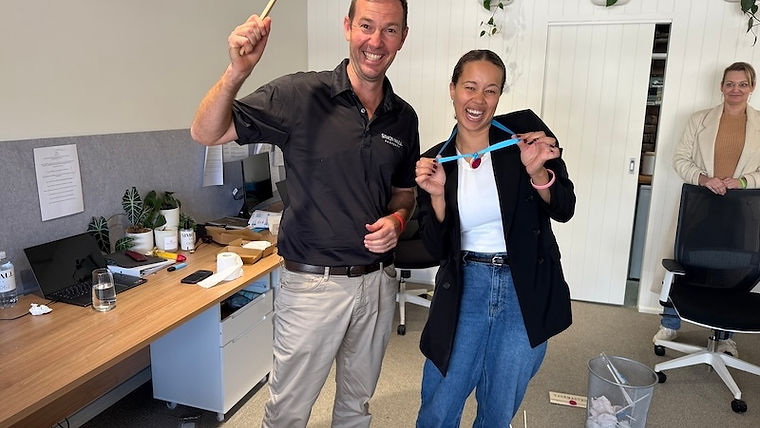
An icebreaker has one job: give everyone in the room a reason to speak before the meeting starts doing the real work. Most of them fail for the same boring reason, which is that they ask people to be interesting on demand in front of their boss.
Below are 40 icebreaker games we actually run, sorted by the constraint you are working under: minutes available, group size, screen or room, and how well people already know each other. There are no trust falls.
Choose by constraint, not by name
Every icebreaker list on the internet starts with the game and works backwards. Do it the other way. Answer four questions first and the shortlist picks itself.
•How long? Under five minutes means pair work or a single round, nothing that needs a set-up or a scoreboard.
•How many? Six to 20 people can do anything. Over 30 needs a format that runs in tables or waves, because nobody wants to hear 40 introductions.
•Where? A room with space changes what is possible. A boardroom or a video call rules out anything physical.
•How well do they know each other? Strangers need introductions. A team that has worked together for years needs something that gets past the version of themselves they bring to meetings.
5-minute icebreaker games for meetings
Short, low-risk, and usable at the top of a weekly stand-up without anyone groaning. These are also the 5-minute team building activities people search for, and they do double duty as meeting openers.
1. One word check-in
Each person gives one word for how their week is going. No explanation, no follow-up. It takes 90 seconds for a team of 12 and gives the facilitator a read on the room before anyone opens a slide deck.
2. Two truths and a lie, reversed
Everyone shares three facts about their weekend and the group guesses which one did not happen. Reversing the classic keeps it from becoming a personality contest.
3. Human bingo
Deal a grid of statements such as "has run a marathon" or "speaks three languages", then people find a colleague who matches each square. It gets people out of their seats and into conversations with people they never speak to. Works from eight people up to a few hundred.
4. This or that
Read out a pair, everyone votes by pointing: coffee or tea, beach or mountains, early bird or night owl. Twelve pairs takes three minutes and produces instant conversation starters.
5. Rose, bud, thorn
One good thing, one thing you are looking forward to, one thing that is stuck. It works as an icebreaker and as a project check-in, which is why it survives.
6. Show and tell, one object
Everyone brings one object from their desk and explains it in 30 seconds. The constraint forces a real answer rather than "I am a people person".
7. The 60-second expert
Each person has one minute to teach the group something useless they know. The group votes for the most useless. It is funny, it is fast, and it reveals who on the team is worth asking for a recommendation.
8. Name, role, one number
Name, role, and one number that matters to you this month. The number is the whole trick: it turns a forgettable introduction into something people remember.
9. Alphabet gratitude
Go around the group, each person names something they are grateful for starting with the next letter of the alphabet. Silly, quick, and hard to be cynical about for more than one round.
10. Desk archaeology
For hybrid teams: everyone holds up the strangest object within arm reach. No prep, no vulnerability, and it works on camera.
Icebreaker games for large groups (30 to 300)
Large groups need formats that score, because nobody can listen to 200 introductions. Run these in tables of six to eight and report back to a shared leaderboard.
11. Table trivia
Six rounds of work-safe trivia, scored per table. The team names alone tell you who is going to be trouble at the Christmas party.
12. Big group bingo
Human bingo at scale: a 25-square grid, ten minutes to fill it, prizes for a line and a full house. Mixes a room faster than any facilitated introduction.
13. Team flag
Each table builds a flag on butcher paper with a name, a motto and a mascot, then presents it in 20 seconds. Cheap, fast, and gives the group a banner to sit under all day.
14. Live poll quiz
A phone-based quiz where everyone answers at once and the leaderboard updates live. Great in a conference plenary because it engages the whole room without anyone leaving their seat.
15. Scavenger photo hunt
Teams photograph a list of things around the venue in 15 minutes: something orange, the oldest person in the room, a perfect shadow. Scored on completion and creativity.
16. Human alphabet
Groups of ten form letters with their bodies while a photographer captures each one. Absurd, physical, and photographs beautifully for the wrap-up slide.
17. Pass the clue
Each table gets a sealed envelope with a puzzle. Solve it and swap with the next table. Keeps 100 people busy without a single microphone announcement.
18. Conference-long team scoring
Assign everyone to a team on arrival, then award points for trivia rounds, quiz answers and on-time arrivals across the whole conference. The scoreboard does the engagement work between sessions.
Virtual icebreakers for remote and hybrid meetings
Online icebreakers fail when the platform is asked to do something the format cannot support. Keep them to one screen, one action and under three minutes.
19. Emoji check-in
Everyone drops one emoji in the chat. Takes 20 seconds and gives the host a read on energy without asking anyone to perform.
20. Screenshot your view
Everyone shares what is outside their window or what their desk looks like. Removes the "who is where" awkwardness in a distributed team.
21. Chat race
Ask a question in the chat and the first three answers read aloud win a point. Gets quiet people typing before they have time to overthink.
22. Virtual scavenger hunt
Bring back something red, something older than you, something you would rescue in a fire. Two minutes, then show and tell.
23. Map pin
Everyone drops a pin where they are joining from and names one thing within walking distance. Best hybrid icebreaker there is, because it makes the remote half visible.
24. Would you rather poll
Five polls, five minutes, results shared live. Low effort, high chat activity.
25. Guess the colleague
Collect three surprising facts from each person before the call and read them out anonymously. The team guesses who it is.
26. Breakout speed intros
Pairs in breakout rooms for three minutes with one question each, then rotate once. The only reliable way to get real conversation out of a large video call.
Funny icebreaker games for teams who already know each other
Once people have known each other for years, introductions are pointless. These work on the assumption that everyone already has material.
27. Worst advice
Each person shares the worst piece of work advice they have ever been given. Funny, and quietly reveals what the team has been doing wrong for years.
28. Six-word memoir of your week
Summarise the week in exactly six words. Difficult enough to be interesting, short enough that nobody drones on.
29. Emoji-only charades
One person spells out a film or a work situation in emoji and the group guesses. Works in person and on video.
30. The wrong answer quiz
Ask factual questions where the funniest answer wins rather than the correct one. Removes the pressure of knowing things.
31. Pet photo brackets
Everyone submits a pet photo, the group votes through a tournament. Crowd favourite every time, and no one has to talk about themselves.
32. Dramatic reading
Take a boring internal document, such as a policy update, and have volunteers read it as a soap opera or a nature documentary. Two minutes, guaranteed laughs.
33. Lie detector
Three people tell a story about a shared work moment, two are true, one is invented. The room votes. Works because the material is already in the room.
Icebreaker games for adults who hate icebreakers
Some people will do anything to avoid the spotlight, and forcing them into it is how an icebreaker turns into a complaint to HR. These formats give everyone a task instead of an audience.
34. Rank the snacks
Tables rank a list of classic Australian snacks from best to worst and defend the ranking. Absurd enough that no one feels exposed.
35. Silent sort
The group has to line up in order of distance travelled to get here, without speaking. Physical, funny, and reveals the loudest person in the room immediately.
36. Anonymous question wall
Everyone writes one question on a sticky note anonymously and the group answers them. The quiet people ask the best questions.
37. Group crossword
One crossword, one table, ten minutes. Everyone contributes and nobody performs.
38. One-minute debate
Pairs argue opposite sides of something trivial for 60 seconds, then swap. Gives everyone a script, which is what nervous people actually need.
39. Play-anytime game
A self-run online game the team plays together with no host and no audience. It is an icebreaker disguised as a break, which is the only kind some teams will accept.
40. Build something
Give each table ten minutes and a limited kit, such as paper, tape and a few straws, and a simple objective. Working on a shared thing together beats any amount of talking about yourselves, which is the whole logic behind the marshmallow challenge.
How to run an icebreaker properly
The game matters less than the way it is framed and closed. A few rules that hold for every format on this page:
•Model it first. Whoever runs the session goes first, and keeps their answer short so nobody feels they have to match it.
•Give a time limit out loud, then hold it. Loose time limits are how a five-minute opener eats twenty.
•Never ask anyone to be vulnerable before you have given them something easy to do.
•Close the loop. Name what you noticed, such as "half the room is new this quarter", and connect it to the agenda. An icebreaker with no close is just a delay.
•Rotate the format. The same opener every week stops being an icebreaker and becomes a chore.
When to skip the icebreaker
If the meeting is 20 minutes long, skip it. If the group already worked together that morning, skip it. If the session is a decision that people have been waiting weeks for, skip it and get to the decision. Icebreakers exist to warm a room that needs warming, and knowing when the room is already warm is the actual skill.
Frequently asked questions
What is the difference between an icebreaker and a team building activity?
An icebreaker is a short warm-up that gets people talking, usually under ten minutes, with no output beyond the conversation. A team building activity is a designed challenge with a goal, a debrief and something the group learns about how they work together. Team Fun runs the second kind: the Amazing Race, Survivor, Game Show and hosted online escape rooms are team building, while the meeting openers on this page are icebreakers.
What is the best icebreaker for a large group?
Human bingo or table trivia, run in tables of six to eight with a shared leaderboard. Anything that asks 100 people to introduce themselves one at a time takes 45 minutes and everyone stops listening after the eighth person. Score it and give it a time limit instead.
How long should an icebreaker take?
Two to five minutes for a meeting opener, and 10 to 15 minutes at the start of a workshop or team event. If it needs more than 15 minutes it has stopped being an icebreaker and become an activity, which is fine, but it needs a debrief to justify the time.
What are good icebreakers for virtual meetings?
Emoji check-ins, chat races, map pins and three-minute breakout pairs. The rule for online icebreakers is one screen, one action, under three minutes. Anything that requires people to switch tools or explain themselves at length loses the call.
Do icebreakers work for introverts?
The ones that give everyone a task do, and the ones that give everyone an audience do not. Silent sorts, group crosswords, ranking exercises and build challenges let quiet people contribute without performing. Team Fun designs every event with mixed personality types in mind, which is why our formats are puzzles and challenges rather than speeches.
Should an icebreaker be free or hosted?
Free meeting openers are fine for a weekly stand-up. For an event where the point is the team building itself, a hosted format is worth the money because someone has designed the scoring, the timings and the debrief. Team Fun quotes hosted events individually, with a written plan usually within one business day.