
Guides
Team Building Scavenger Hunts: How They Work and How to Run One That Lands
16 November 2026 · 8 min read
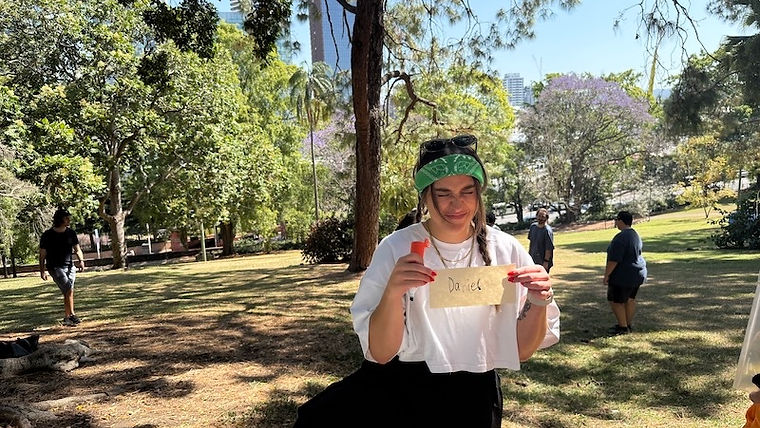
A scavenger hunt sounds like the easiest team event to run: give people a list, send them out, count the points. In practice the list is the whole product. A bad one sends eight people to photograph a landmark while two of them do the work, and a good one keeps every person in the team busy for ninety minutes without anyone standing around waiting for a decision.
This is how modern team building scavenger hunts are structured in Australia, how they differ from a city race, and the design rules that separate a hunt people talk about afterwards from one they forget by Tuesday.
What a modern scavenger hunt actually is
The paper list still exists, but most corporate hunts now run on a phone: teams receive challenges through a link, submit photos and answers, and watch a live leaderboard. That changes the design in two useful ways. Scoring can be immediate, and challenges can adapt to the location rather than being generic.
•Clue-driven: teams find a place or object from a riddle, not from a map pin. The finding is the activity.
•Challenge-driven: photo, video and puzzle tasks that require cooperation, not just speed.
•Scored: points, bonus multipliers and a visible leaderboard, so teams know where they stand while they can still do something about it.
•Time-boxed: a hard finish with a briefing and a wrap, which is what stops a hunt drifting into a walk.
Scavenger hunt vs Amazing Race
Both put teams out in the world with clues and a scoreboard, which is why they get used interchangeably. The difference is the shape of the route, and it matters when you choose.
•A scavenger hunt gives every team the same open list and lets them decide the order. Teams spread out, choose their own strategy, and often never cross paths until the finish.
•A race gives teams checkpoints in a sequence, with challenges at each one. Teams are pulled through the same locations in their own order, and the scoreboard is closer throughout.
Choose a hunt when the group is large or the site is open and you want teams to strategise. Choose a race when you want a defined finish line, a shared route and a big screen finale. Both work indoors, and our Mystery Race and Spy Race formats sit between the two.
Four hunt formats, and when each one fits
Outdoor city hunt
The classic. Clues anchor to streets, statues, laneways and shops, and the city supplies the content. It needs a walkable area, a start and finish venue, and a plan for rain. Best for 20 to 200 people in a CBD.
Indoor office or venue hunt
Underrated and weatherproof. Challenges happen in rooms, corridors and car parks, and the clues can reference the company. It suits a 90-minute slot inside a conference or an afternoon when people should not leave the building.
Resort or retreat hunt
Built around the property: grounds, facilities and the local town. It is the format that works best on a retreat where the venue is the destination and nobody wants to travel again.
Hybrid or remote hunt
Teams hunt in their own suburb or their own home while a host runs a shared scoreboard on a video call. It works for multi-site teams and for anyone who cannot travel, and it needs a host who can keep energy up without physically being in the room.
Clue design rules that decide the result
•Answerable on site, not on Google. If a search engine solves it, it is trivia, not a hunt.
•Escalating difficulty. Start with two quick wins so every team learns the mechanics, then make the middle hard and the last clue a race.
•Lower physical demand than people expect. Hunts are walked, not run. Build in seating and water stops, and plan a route that suits mixed ages and fitness.
•Tasks with roles. Every challenge should need at least two people, whether that is holding the phone, appearing in the photo or solving the riddle.
•No single winner advantage. Bonus challenges that let a trailing team catch up keep the last 20 minutes interesting.
A sample challenge set
Twelve challenges from a city hunt, to show the mix of clue, photo, interaction and puzzle. Every one is designed so the whole team has to participate.
•Find the clock that has two faces and photograph your team underneath it at the same time.
•Collect a business card from someone who was not born in Australia.
•Recreate a famous album cover using whatever is on the street, then re-shoot it from the original angle.
•Solve the riddle to find the laneway, then find the number hidden in the mural.
•Get a stranger to teach your team a phrase in another language, on video.
•Build the tallest free-standing structure you can from objects you can carry in one hand.
•Find something older than the city itself and explain why it is here.
•Order one coffee for the team and split it into five equal serves without a measuring tool.
•Take a photo where all five team members are airborne at once.
•Decode the three-letter code from the answer to the previous clue and enter it on the scoreboard.
•Trade a challenge with another team you meet, then complete theirs.
•Return to base with something that represents your team, and be ready to explain it in fifteen seconds.
Group size, timing and crew
•Teams of 4 to 8. Bigger teams hide passengers, smaller teams lose the strategy.
•Ninety minutes to two and a half hours of hunting, plus briefing and wrap. Three hours total is the sweet spot for a half-day.
•One host per 30 to 40 participants for briefing, scoreboard and safety, plus a roaming crew member on bigger hunts.
•A start and finish point matters more than the route. People need a place to gather, leave bags and eat afterwards.
Five reasons hunts fail
•Too much walking. A hunt that covers 8 kilometres in summer becomes a punishment, and the last team gives up.
•One person solves everything. Without role-based tasks, the fastest reader on the team does the whole event.
•Ambiguous clues. A clue that could be two places costs the team 20 minutes and their goodwill.
•No visible scoreboard. If teams do not know they are behind, the last third has no tension.
•No wrap. Ending without naming the winner or explaining a standout challenge throws away the moment the event was for.
Running one without a host
If the budget will not stretch to a hosted hunt, our play-anytime online escape games are the self-run alternative: three award-winning games at $30 or $35 AUD for up to 8 players, bought online and playable straight away. They are puzzles rather than a city hunt, but they deliver the same thing a good hunt does, which is a team in a room solving something together with a clock running.
The list is the product. If a challenge can be completed by one person on their phone, it is not a team challenge.
Frequently asked questions
What is a team building scavenger hunt?
A team event where groups of four to eight receive a list of clues and challenges, then find and complete them within a time limit while earning points on a scoreboard. Modern versions run on a phone link with photo and puzzle submissions, and finish with a briefing and wrap-up. It works outdoors in a city, indoors in an office, at a resort, or remotely for teams on separate screens.
What is the difference between a scavenger hunt and an Amazing Race?
A scavenger hunt gives every team the same open list and lets them choose the order, so teams spread out and strategise. An Amazing Race sets checkpoints in sequence with a challenge at each one, so the route is defined and the scoreboard stays closer. Hunts suit larger groups and open sites; races suit a shared route and a big-screen finale.
How many people can do a scavenger hunt?
Hunts work from about ten people up to a few hundred. Teams of four to eight are the sweet spot, and groups above 200 are usually split into waves with a combined finish and leaderboard. One host per 30 to 40 participants keeps briefing, scoring and safety manageable.
How long should a team building scavenger hunt run?
Ninety minutes to two and a half hours of hunting, plus 20 to 30 minutes for briefing and the wrap. Three hours total fits neatly into a half-day and leaves time for food, which is what most teams remember anyway.
Can we run a scavenger hunt indoors?
Yes, and it is often better in winter or when the group cannot leave the venue. Challenges happen in rooms, corridors and nearby shared spaces, and the clues can reference the company. It is the most weatherproof version of the format.
How do we make sure quiet people are involved?
Build role-based challenges so every task needs at least two people, and vary the roles: holding the phone, appearing in the photo, solving the clue, negotiating with a stranger. Mixed-ability design and a lower walking distance also matter more than most organisers expect, so say if the group includes mobility needs when you enquire.